Guide
A single garden service on a private home and the common ground of an estate or a complex are not the same job scaled up. The difference is not size. It is that shared ground has to look consistently kept, all year, to more than one household's standard, and a once-off visit cannot do that.
Regular intervals catch problems while they are still small: a hedge that gets trimmed every six weeks never gets to the point of needing hard cutting back, and a tree with early deadwood gets flagged on a routine visit rather than discovered after a limb comes down. A once-off tidy-up only ever resets the clock; it does not change the rate at which the garden needs attention again.
A garden does not need the same attention in August that it needs in January. A schedule that flexes, more frequent visits through spring growth and summer irrigation season, fewer through the dormant winter months, keeps the standard consistent without paying for unnecessary visits when growth has slowed.
Trees on shared estate ground carry liability that a single homeowner's garden does not: a failure affects common areas, access roads, or a neighbour's property rather than only the tree owner's own. That is usually the argument for a standing arrangement with routine risk checks built in, rather than waiting for a body corporate meeting to raise it after something has already gone wrong.
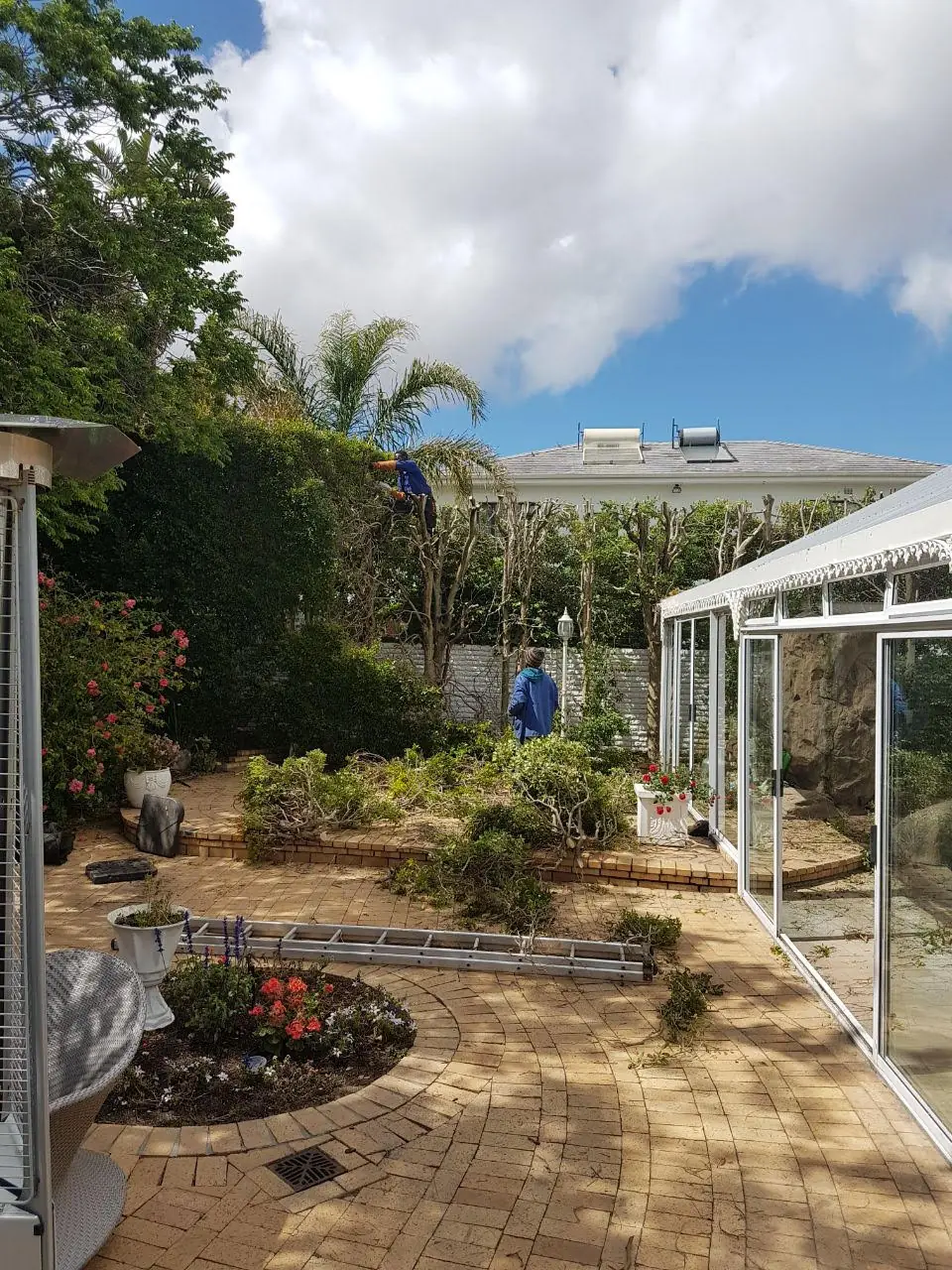
Related service
Garden maintenance
Standing arrangements for estates and complexes.
More on garden maintenanceMore guides
A tree that has to come down, a stump in the way of a new lawn, a load of firewood before winter, the chipper for a weekend, or a garden kept on a schedule. Send us the suburb and what you need.
We come out and look at it properly.