Guide
Cape Town's summers are long, dry and windy, and a garden's water use through that stretch has as much to do with what is on top of the soil as what is coming out of the tap.
A proper layer of mulch slows evaporation from the soil surface, moderates soil temperature so roots are not sitting in overheated ground on a hot day, suppresses weed germination by blocking light, and breaks down over time into organic matter that improves how well sandy Cape soils hold water in the first place.
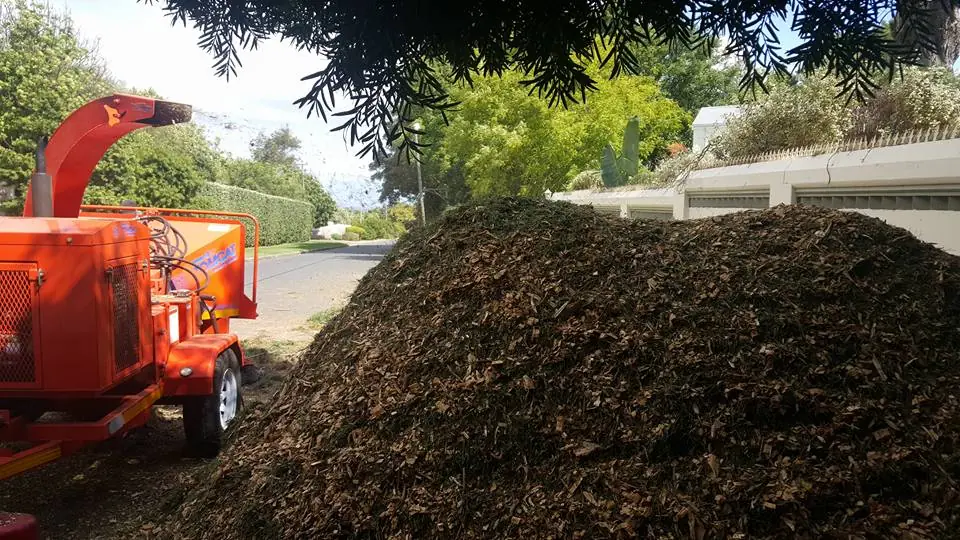
Coarse wood chip, the kind that comes off a chipper, lasts longest and is best under trees and shrubs where you are not digging in and out of the bed regularly. Finer bark mulch suits garden beds you replant seasonally. Compost breaks down fastest and feeds the soil more directly but needs topping up more often to keep the same moisture benefit.
Early spring, before the dry season sets in and while the soil still has some moisture in it, gets the most benefit out of a mulch layer. Laying it onto already bone-dry soil in the middle of summer works, but it takes longer for the moisture benefit to show.
A 5 to 7cm layer over a standard suburban bed works out to roughly one cubic metre of mulch per 15 to 20 square metres of bed. Beds under established trees, where the chip has been sourced from that same felling or chipper hire, are usually the most efficient way to source it.
More guides
A tree that has to come down, a stump in the way of a new lawn, a load of firewood before winter, the chipper for a weekend, or a garden kept on a schedule. Send us the suburb and what you need.
We come out and look at it properly.