Guide
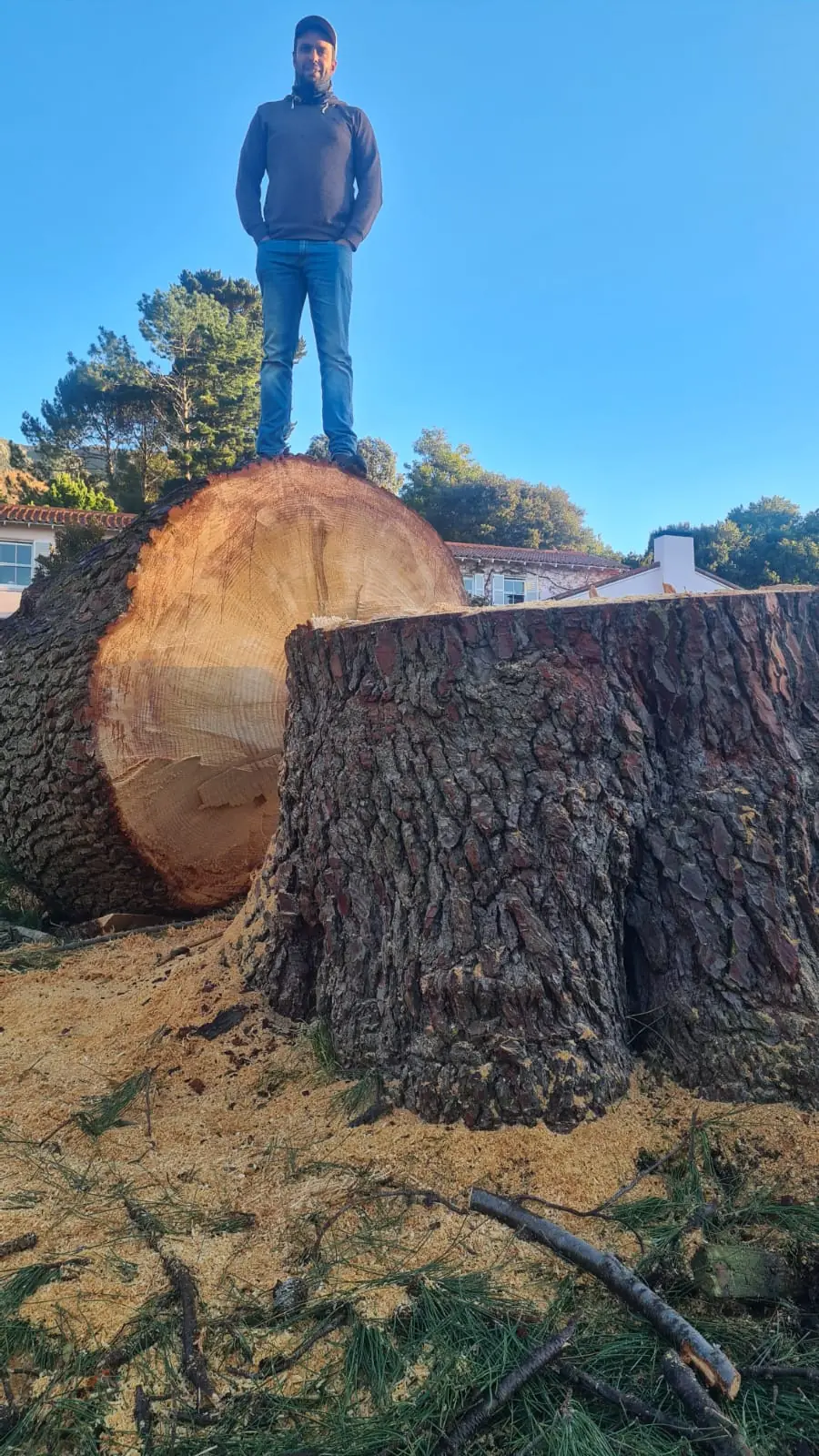
Once a tree is down, the stump is a separate decision, not an automatic next step. Three real options exist, and the right one depends on what happens to that spot next.
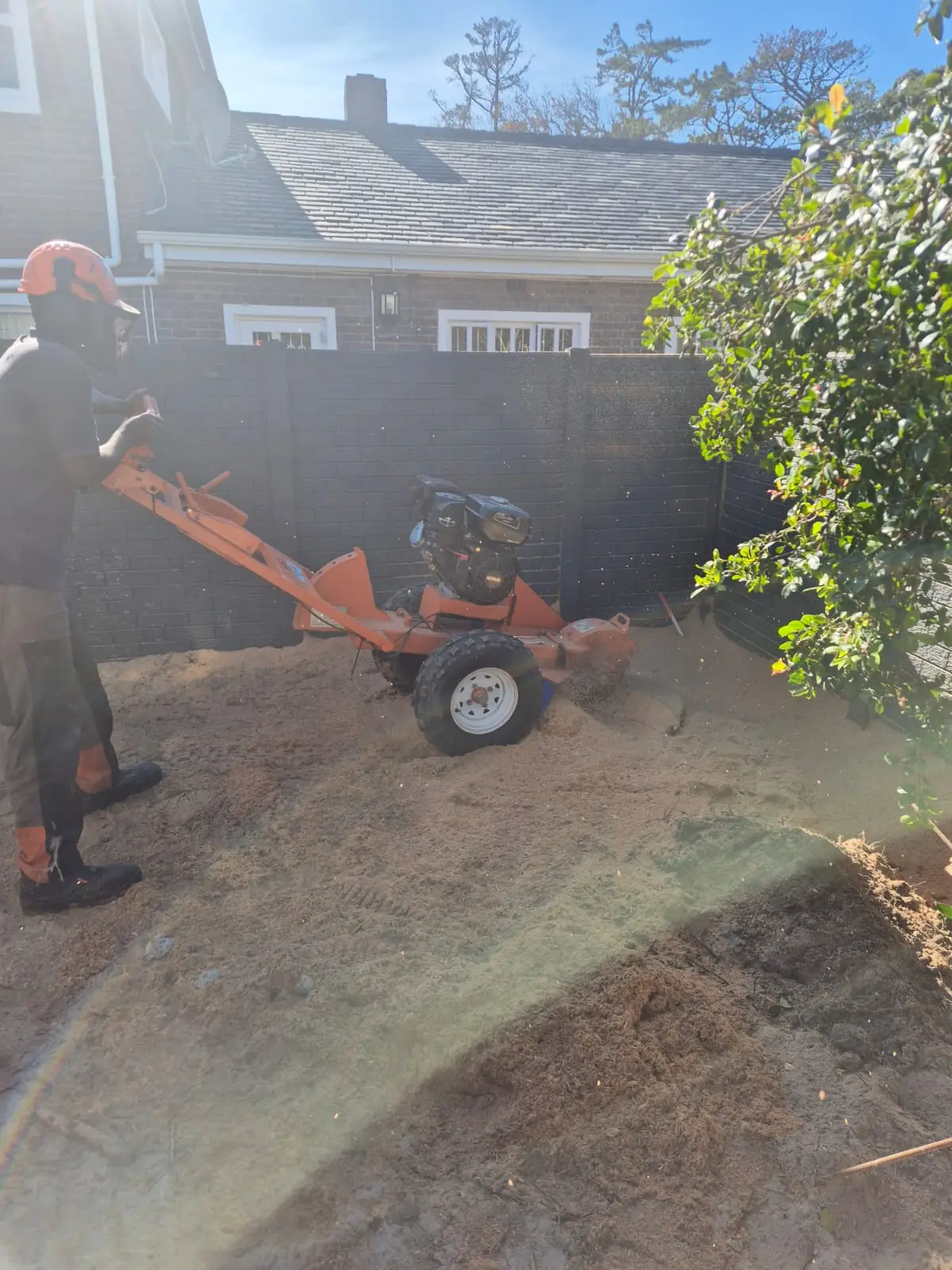
A grinder mills the stump down below grade, turning it into wood chips rather than removing the root ball. It is the fastest option and the least disruptive to what is planted nearby, because it does not pull at the surrounding soil or roots. The right choice when the plan for that spot is a lawn, a garden bed, or paving that does not need the old root ball gone entirely.
Full excavation removes the stump and the main root ball, which is more disruptive to the surrounding ground but is the only option that actually clears the area for a new structure, a foundation, or a tree planted in the exact same spot. It costs more ground disturbance for a cleaner result underground.
Not every stump needs to go. Left alone, a stump slowly decomposes over several years and can be left as a garden feature, a low platform, or simply ignored if it is out of the way. This is a legitimate choice when there is no near-term plan for the space, not a compromise.
The question worth answering first is what goes into that spot next, and when. A lawn or bed calls for grinding. A new structure or driveway calls for digging out. No near-term plan means leaving it is a perfectly reasonable option, not the one you settle for.
Related service
Stump removal
Ground out below grade so you can plant, pave or lay lawn straight over it.
More on stump removalMore guides
A tree that has to come down, a stump in the way of a new lawn, a load of firewood before winter, the chipper for a weekend, or a garden kept on a schedule. Send us the suburb and what you need.
We come out and look at it properly.